Why It's Nearly Impossible to Find a Long-Term Villa Rental in Sri Lanka's South Coast
Team LiveInLanka · October 3, 2026 · 11 min read · Relocation Advice
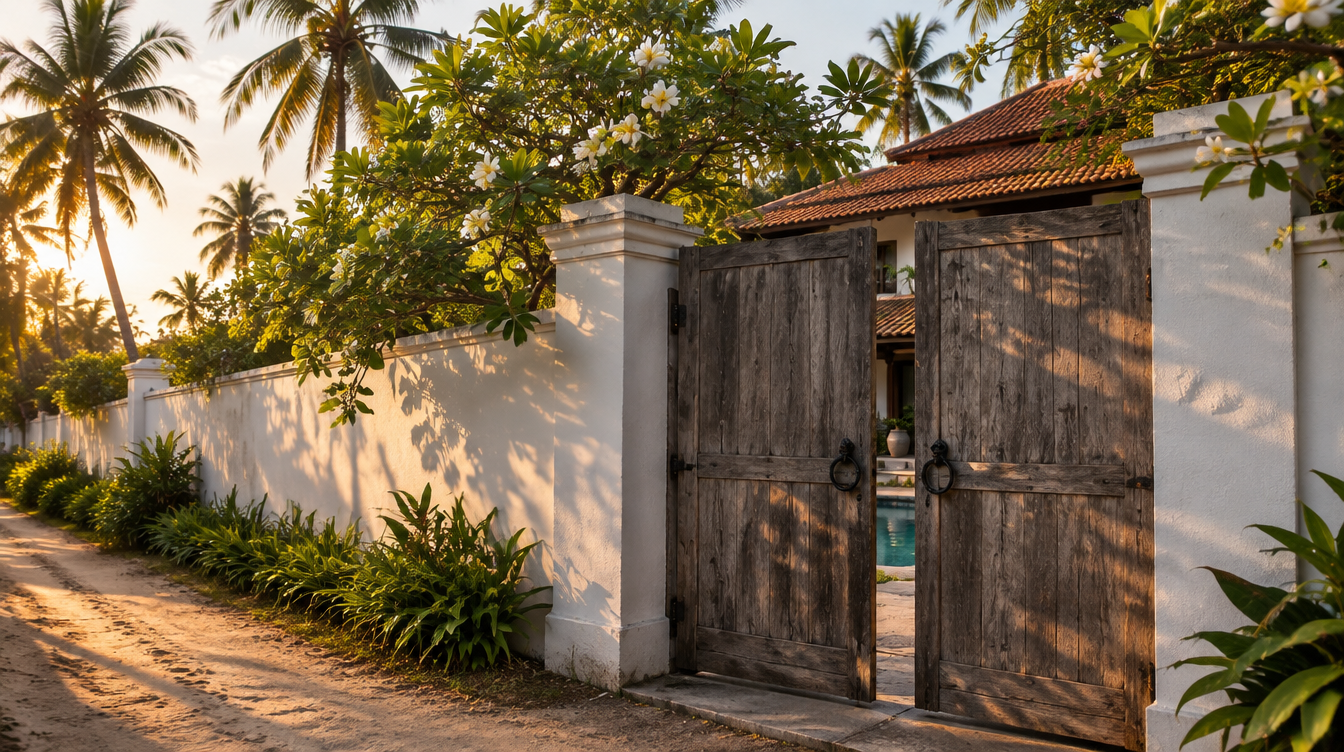
If you've spent weeks—or months—trying to secure a quality long-term villa rental along Sri Lanka's south coast, you've probably reached the same frustrating conclusion: the good ones simply aren't available.
You scroll through endless listings. You message villa managers. You get polite responses, then silence. Or worse: "Sorry, minimum 3-night stay only."
This isn't a coincidence. It's not bad timing. And it's definitely not because owners don't want your money.
What you're experiencing is the result of a perfect storm of economic incentives, employment laws, platform policies, and ownership structures that make long-term rentals financially irrational for most villa owners. Here's what's really happening behind the scenes.
1. The Best Villas Were Sold Years Ago—And Never Hit the Rental Market
The first harsh truth: the genuinely good villas in prime locations are already owned and occupied.
According to recent market analysis, the south coast from Ahangama to Dikwella has reached a state of "structural scarcity"—meaning well-designed, well-located, professionally operated villas are simply not available in sufficient numbers to meet demand. maisonceylon
The properties you're looking at—the beachfront compounds, the lake-view estates, the architect-designed homes—were typically:
- Built 5-15 years ago by international investors or wealthy Sri Lankan families
- Sold privately before they ever reached public rental platforms
- Kept for personal use with occasional short-term rentals to cover costs
- Managed by exclusive agencies that don't list on open marketplaces
Maison Ceylon, a leading villa investment firm, reports that their professionally managed 2-bedroom villas on the south coast achieve 75-90% occupancy versus 45-55% for unmanaged standalone properties. Translation: the good villas are already booked solid, year-round, through private networks. maisonceylon
What remains on the open market? Properties that are:
- Overpriced relative to their quality
- Poorly maintained
- In less desirable locations
- Owned by absentee landlords with unrealistic expectations
The reality check: If a villa is truly exceptional—beachfront, architect-designed, professionally landscaped—it's almost certainly already under long-term management or private ownership. You're competing with people who booked it three years ago.
2. The Math Doesn't Work: Daily Rentals Earn 3x More Than Long-Term
Here's the economics that kills long-term rental availability:
Short-term rental income potential:
- Average daily rate (ADR) for a 2-bedroom south coast villa: $180-$210 maisonceylon
- At 65-70% annual occupancy (achievable with professional management): $42,000-$54,000 per year
- Premium properties in Weligama/Mirissa: $1,200-$1,450 per night for high-end villas economynext
Long-term rental income potential:
- Monthly rent for comparable villa: $1,500-$3,000 (highly variable)
- Annual income: $18,000-$36,000
The gap: Short-term rentals can generate 2-3x more annual revenue than long-term leases, even accounting for vacancy periods. elegantrealestate
But here's where it gets more complicated.
3. The Employment Trap: Why Owners Can't Just "Scale Down" for Long-Term Tenants
You might think: "Okay, but if I book long-term, the owner saves on daily operations—no constant cleaning, no guest turnover, no platform fees. Shouldn't they pass those savings to me?"
In theory, yes. In Sri Lanka, employment law makes this nearly impossible.
The Legal Reality
Sri Lankan labor law is highly protective of employees, especially in the hospitality sector. Key provisions:
- Termination requires approval: Under the Termination of Employment of Workmen Act (1971), employers cannot dismiss workers without prior written consent from the employee OR approval from the Commissioner of Labour. labourdept.gov
- Severance is mandatory: Workers with 5+ years of service are entitled to gratuity payments of half a month's salary for each completed year of service. wageindicator
- Compensation scales are steep: For workers with 1-5 years of service, severance is 2.5 months' salary per year. For 6-14 years: 2 months per year. sailglobal
- Caps are high: The maximum compensation per worker is LKR 2.5 million (approximately $8,500 USD as of 2026). teamed
The Practical Impact
A typical 4-5 bedroom luxury villa employs:
- 1 villa manager
- 1-2 chefs/cooks
- 2-3 housekeeping staff
- 1-2 gardeners
- 1 security guard/night watchman
Total staff: 6-10 people, many with 5-15 years of service.
If an owner switches from short-term to long-term rental and tries to reduce staff, they face:
- Legal hurdles: Need Commissioner approval for each termination
- Severance costs: Potentially LKR 5-15 million ($17,000-$51,000) in total payouts
- Reputational damage: In a clustered community like Ahangama-Habaraduwa-Weligama, word spreads fast. Owners who fire long-term staff face social pressure.
The result: Most owners keep their full staff regardless of rental model. The salary burden remains the same. Long-term rental income must cover these fixed costs—making it even less attractive financially.
As one property manager put it: "We can't just fire people who've worked for us for 10 years. This is Sri Lanka. These are family relationships, not just employment."
4. The Airbnb Problem: Going "Offline" Can Get You Banned
Even if an owner wants to offer long-term rental, they face a platform-level obstacle: Airbnb's policies on inactive listings.
How Airbnb's Algorithm Works
Airbnb's search ranking system penalizes listings that:
- Have low availability calendars
- Go "offline" for extended periods
- Reject booking requests frequently
- Show inconsistent booking patterns
According to Airbnb's help center, hosts who suspend listings or block extended calendar periods risk:
- Listing suspension (removed from search results)
- Account restriction (unable to accept new bookings)
- Account deactivation (permanent ban from platform) airbnb
The Three-Month Rule
Multiple sources indicate that Airbnb may flag or suspend listings that are unavailable for 3+ consecutive months. The platform interprets this as: traverselegal
- The property is no longer actively hosted
- The host is trying to circumvent platform fees
- The listing should be removed to improve search quality for guests
Recovery is difficult: Once suspended, hosts must appeal with evidence, fix triggers, and wait 2-12 weeks for reinstatement—if approved at all. nowistay
The Owner's Dilemma
For a villa earning $40,000-$60,000 annually through Airbnb, the risk of:
- Losing search ranking
- Facing account suspension
- Being unable to re-list easily
...makes accepting a 6-12 month long-term rental existentially risky. Even one problematic long-term tenant could trigger a platform ban that destroys future short-term income.
As one Weligama villa owner explained: "Why would I risk my $50,000 annual Airbnb income for a $20,000 long-term rental? If Airbnb bans me, I lose everything."
5. The Partnership Problem: Multiple Owners, Zero Consensus
Many luxury villas in Sri Lanka's south coast are co-owned properties with complex ownership structures:
- Family partnerships: 3-5 siblings or cousins who inherited land
- Investment syndicates: 4-8 investors who pooled capital to build
- Developer splits: Original developer sold individual units to different buyers
- International co-ownership: Sri Lankan diaspora + local partners
The Decision-Making Nightmare
For a villa to accept a long-term rental, all co-owners must agree on:
- Rental price (often contentious)
- Lease terms (duration, deposit, renewal options)
- Tenant selection (risk tolerance varies)
- Revenue split (how to divide monthly income)
According to property investment guides, this creates massive friction:
- Some owners prefer short-term income (higher returns)
- Others want long-term stability (predictable cash flow)
- Some want personal use windows (1-3 months per year)
- Others prioritize capital appreciation over rental income maisonceylon
The path of least resistance? Keep the status quo. Don't rock the boat. Continue short-term rentals through existing management companies.
As one property manager in Galle noted: "Getting 6 co-owners to agree on anything is like herding cats. Long-term rental proposals die in WhatsApp groups before they even reach me."
6. The Middleman Problem: Why Your Inquiry Never Reaches the Owner
Here's the most frustrating truth: your long-term rental inquiry probably never reaches the actual owner.
The Staff Incentive Structure
Villa receptionists, managers, and booking coordinators are typically:
- Paid fixed salaries (not commission-based)
- Evaluated on occupancy rates and guest satisfaction
- Employed long-term with job security concerns
When you inquire about a 6-12 month rental:
- They can't approve it (only owners can)
- They must forward it to owners/partners
- Owners often ignore it (see points 1-5 above)
- You get no response (or a generic "not available" reply)
The Hidden Fear
In some cases, villa staff actively discourage long-term inquiries because:
- Long-term tenants may do their own cleaning/cooking
- Reduced daily operations = potential staff reductions
- Staff fear job loss if villa shifts to long-term model
While not universal, this creates a perverse incentive: staff may "gently drop" long-term inquiries to protect their employment. tripadvisor
As one expat who lived in Sri Lanka noted: "After we settled into our long-term rental, we hired local help for cooking and cleaning. It's more labor-intensive than the UK, but doable." Translation: long-term tenants often reduce villa staffing needs—creating tension with existing employees. tripadvisor
7. Additional Barriers: What Else Makes Long-Term Rentals Rare
Beyond the factors above, here are three more that suppress long-term villa availability:
A. Currency and Payment Risk
Sri Lanka's foreign exchange volatility (especially post-2022 economic crisis) makes owners prefer:
- USD-denominated short-term bookings (paid upfront via Airbnb/Booking.com)
- International platform protection (Airbnb handles payment disputes)
- No currency conversion risk (platforms pay in USD/EUR)
Long-term rentals typically require:
- LKR payments (subject to depreciation)
- Direct bank transfers (no platform protection)
- Monthly collection (risk of non-payment, eviction challenges)
For owners, this adds financial risk to an already unattractive proposition. longtermlettings
B. Legal and Eviction Complexity
Sri Lankan rental law (Rent Act) provides strong tenant protections:
- Eviction requires court orders (6-18 month process)
- Tenants can contest rent increases
- Lease registration sometimes required with authorities longtermlettings
For foreign owners (especially non-resident), the prospect of:
- A problematic long-term tenant
- A 12+ month eviction battle
- Potential property damage during dispute
...makes short-term rentals (where guests leave every 3-7 days) infinitely safer.
C. The "Personal Use" Factor
Many villa owners are Sri Lankan diaspora (UK, Australia, Middle East) who:
- Built villas for family holidays
- Use properties 1-3 months per year (typically December-April)
- Rent short-term during off-season to cover costs
Long-term leases would:
- Block personal use windows
- Require complex lease break clauses
- Create scheduling conflicts with family plans
Maison Ceylon reports that their villa management program specifically accommodates "personal-use windows (1 to 3 months per year, ideally outside high season)" because this is such a common owner requirement. maisonceylon
The Bottom Line: Why the Market Stays Broken
Let's connect all the dots:
| Factor | Impact on Long-Term Availability |
|---|---|
| Scarcity of good villas | Best properties already owned/occupied |
| 3x income gap | Short-term earns 2-3x more annually |
| Employment law | Can't reduce staff; salaries remain fixed cost |
| Airbnb policies | Going offline risks platform ban |
| Multiple owners | Consensus impossible; status quo wins |
| Staff incentives | Inquiries filtered/blocked before reaching owners |
| Currency risk | USD short-term safer than LKR long-term |
| Eviction complexity | Short-term guests = no legal risk |
| Personal use | Owners want flexible access year-round |
The result: A market where long-term villa rentals are economically irrational, legally risky, and operationally complicated for owners.
What Can Long-Term Seekers Do?
If you're still determined to find a long-term villa, here are practical strategies:
1. Target Smaller, Owner-Occupied Properties
- 2-3 bedroom villas (not 5-6 bedroom compounds)
- Properties with independent websites (not just Airbnb/Booking)
- Family-run operations (not professional management companies)
2. Work Through Local Networks
- Join Facebook groups: "Villa Owners Sri Lanka," "Villas in Sri Lanka"
- Contact local agencies: Eden Villas (+94 77 049 8823), Luxury Villas Sri Lanka (+94 777 835555)
- Ask for "off-market" properties not listed publicly
3. Offer Premium Pricing
- Propose $3,000-$5,000/month for properties that could earn $4,000-$6,000/month short-term
- Make the math work for owners (close the 3x income gap)
- Offer 6-12 months upfront payment in USD
4. Be Flexible on Location
- Look beyond Weligama-Mirissa-Ahangama (oversaturated, expensive)
- Consider Tangalle, Hiriketiya, Dikwella (emerging areas, better availability) maisonceylon
- Accept 10-15 minute drive to beach (not beachfront)
5. Consider Alternative Accommodation
- Serviced apartments in Galle Fort (more flexible terms)
- Boutique hotels with monthly rates (some offer 30-50% discounts)
- Co-living spaces (emerging in Ahangama-Weligama corridor)
The Path Forward: What Would Need to Change
For the long-term rental market to improve, several things would need to happen:
- Platform policy reform: Airbnb/Booking.com need to create "long-term friendly" listing categories that don't penalize 6-12 month bookings.
- Employment law flexibility: Streamlined processes for seasonal staff adjustments without massive severance burdens.
- Currency stability: Reduced LKR volatility would make long-term LKR leases less risky for owners.
- Professional long-term management: Third-party companies that specialize in 6-12 month rentals (handling tenant screening, rent collection, maintenance).
- Owner education: Showing owners that quality long-term tenants (remote workers, families, retirees) can be lower-maintenance than constant short-term guest turnover.
Until then, the south coast villa market will remain structurally biased toward short-term rentals—and long-term seekers will continue facing the frustration you've experienced.
Final Thought
The next time you message a villa manager and get silence, remember: it's not personal. It's a rational response to a market structure that makes long-term rentals financially unviable, legally risky, and operationally painful for owners.
Your best bet? Work the system, don't fight it. Target smaller properties, offer premium pricing, leverage local networks, and be prepared to compromise on location and amenities.
The perfect long-term villa exists. It's just not on Airbnb.
Sources
- Maison Ceylon — villa yields, occupancy and owner personal-use windows
- EconomyNext — Crystal Property Group branded residencies
- Elegant Real Estate — short-term vs long-term leases in Sri Lanka
- Department of Labour — Termination of Employment Branch
- WageIndicator — notice and severance in Sri Lanka
- SAIL Global — termination in Sri Lanka
- Teamed — Sri Lanka termination and severance guide
- Airbnb Help Center — listing and account suspension
- Traverse Legal — Airbnb account flagged for unusual activity
- Nowistay — recovering from an OTA suspension
- Tripadvisor forum — long-term rental in Sri Lanka
- LongTermLettings — monthly rentals in Sri Lanka