Don't Burn the Bridge: A Soft-Landing Plan for Moving Your Family to Sri Lanka
Team LiveInLanka · October 3, 2026 · 9 min read · Relocation Advice
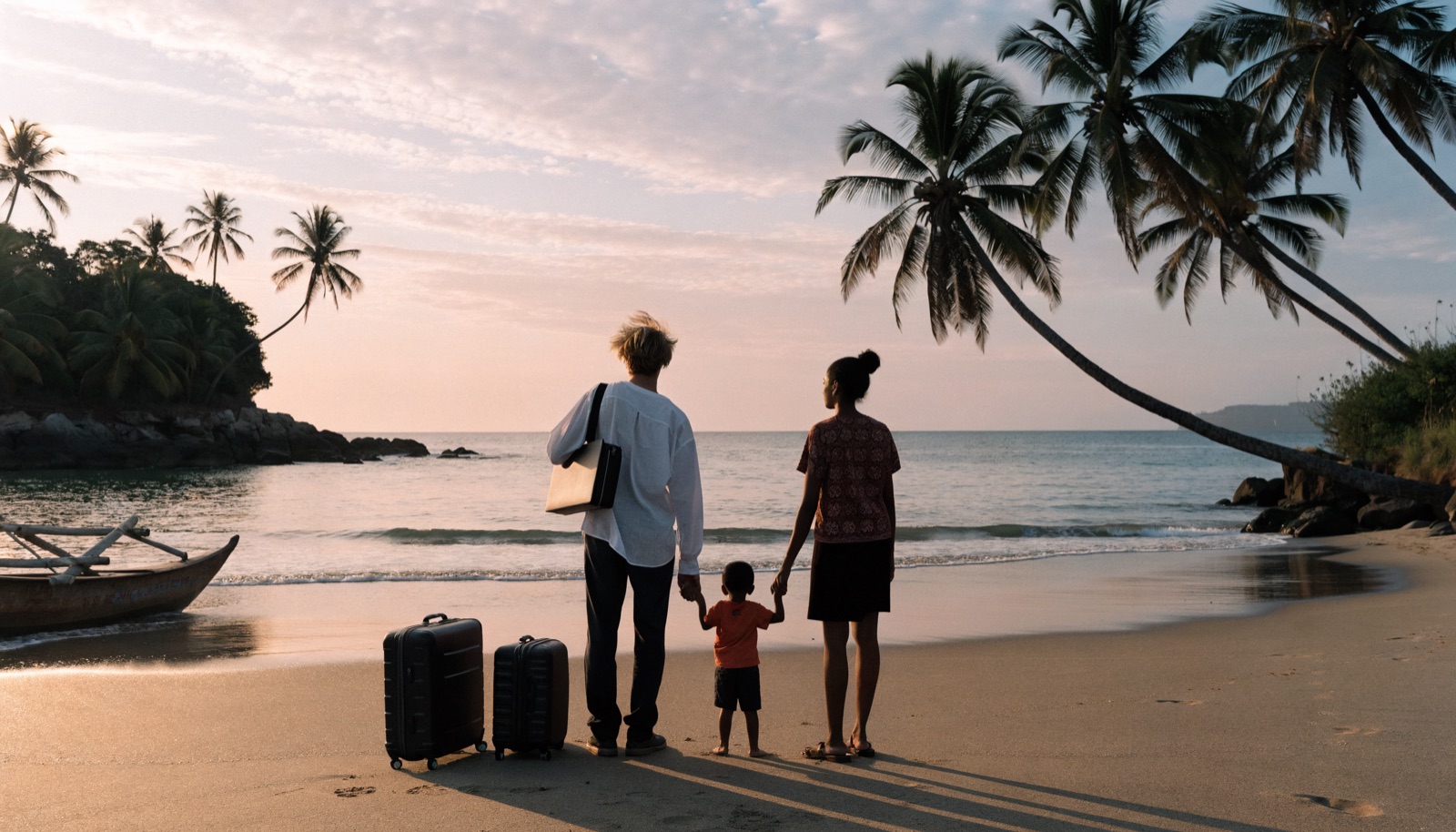
Near the end of a long, lively thread on the Sri Lanka subreddit, a Scandinavian husband who'd been asking about moving to his wife's hometown posted a short update. It was the most sensible thing anyone wrote in the whole discussion:
"I think we might save up for the next half year and then do it. We have some equity in our house, so we could remortgage and take out 10–15 million rupees to get us started, and still have a little savings. And we'll rent out our home in Scandinavia, so we always have a backup in case it isn't good living here for me or my wife and kids."
Read that again, because it's a whole relocation strategy in four sentences. Save first. Bring a starting fund. Keep the house. Have a way back.
A Sri Lankan living in Scandinavia, who'd done the same move in reverse, gave him almost identical advice: "Keep the jobs, move for a year or a couple of years and experience it. Play it safe for a while until you make the call."
We call this the soft landing. It's the single biggest difference between families who thrive in Sri Lanka and families who leave after eighteen months feeling burnt. Here's how to do it.
Step 1: Separate the dream from the decision
The dream is easy: sunshine, family close by, kids running barefoot in the garden. You already know you want it. (If you need reminding why, read The Open-Door Life.)
The decision is different. It's a set of practical questions:
- What income will we live on?
- Where will we live, and on what visa?
- Where will the kids go to school?
- What happens if it doesn't work out?
A man who'd moved from Sri Lanka to Australia warned against confusing "the awe of a vacation" with a desire to live somewhere. He's right, but the answer isn't to give up the dream. It's to test it like a resident, not a tourist. That's what this plan is for.
Step 2: Lock in your income before you land
Almost every useful reply in that thread said the same thing: bring your income with you.
"Make sure you have a remote job or steady income," one experienced commenter advised. "Don't expect to find a job in Sri Lanka."
That's not a knock on the country. Local salaries are much lower than European ones, most local roles go to Sinhala and Tamil speakers, and hiring a foreigner involves employer-sponsored visa paperwork that few companies bother with. The families who have the easiest time are the ones who arrive with:
- A remote job they already hold (and have confirmed in writing they can do from Sri Lanka, including the time-zone overlap; Sri Lanka is 3.5–4.5 hours ahead of Central Europe),
- Freelance or consulting clients abroad,
- Rental income from a home they've kept (more on that below),
- Or pension or investment income.
Starting a local business is possible, and several commenters had done it. But as one said, "It takes years to build a profitable business no matter where you are." Treat it as a year-two project, not a day-one plan.
If you're not in a mixed marriage, look at the Digital Nomad Visa as a route designed for exactly this kind of remote income.
Step 3: Keep the house (seriously)
This is the bit most people skip, and the bit we'd underline twice.
The original poster's instinct, renting out the family home rather than selling it, does three things at once:
- It gives you income in a strong currency every month, which goes a long way in Sri Lanka.
- It keeps your foot on the property ladder back home, which matters if you ever return.
- It takes the fear out of the move. When the door back is open, you can enjoy the experiment instead of white-knuckling it.
Remortgaging to release a starting fund is a personal call; talk to your bank and an adviser about rates and risk. But the principle is sound: don't burn the bridge you might need.
Step 4: Know your savings number
"How much should we save before making the final break?" was one of the four questions in that original post. Nobody gave a single number, because there isn't one. But you can build yours from three buckets:
1. Set-up costs (one-off)
- Flights, shipping a few boxes (or a container), pet relocation if needed
- Rental deposit (often several months upfront) and basic furnishings
- School admission fees
- A vehicle, if you decide you need one (this is the big one; see our cost breakdown)
2. A runway (6–12 months of living costs) Even with a remote income, hold enough to cover the household for at least six months if that income stopped. For a family living comfortably in the Galle area, our sample budget lands around USD 2,000–4,000 a month.
3. The "go home" fund Several commenters insisted on this, and they're right: keep enough to fly the whole family back and cover a couple of months of resettling. You'll probably never touch it. That's the point.
The 10–15 million rupees the original poster mentioned (very roughly USD 35,000–50,000) is a healthy starting fund for a family that's keeping its income and its house. Many families start with less.
Step 5: Sort the visa the right way
Visas are where the "just go for it" energy meets reality, so it pays to get this right early.
- If your spouse is Sri Lankan, you're in a good position. Sri Lanka offers a residence visa for the foreign spouse of a Sri Lankan citizen, usually renewed periodically. As one long-term foreign resident put it, "with your wife you can get the residence visa easily." Have your marriage certificate (legalised or apostilled as required), your spouse's documents and proof of address ready, and check the current conditions with the Department of Immigration and Emigration, especially if you plan to work for a local company.
- If you're a remote worker, look at the Digital Nomad Visa.
- If you're coming for work with a Sri Lankan employer, the company sponsors the process.
- Retirement and investment-based residence options also exist, with their own financial thresholds.
Relocation firms list the standard paperwork: a passport valid for at least six months, the application form, proof of funds, health insurance, and supporting documents for your category. Our advice: start the process before you ship anything, and keep scanned copies of everything.
On property and businesses, a commenter noted that many mixed couples hold land or register businesses in the Sri Lankan spouse's name, because foreigners face restrictions on owning land. That's common and legal, but get independent legal advice and make sure both partners are protected in writing.
Step 6: Do a trial year, inland and unhurried
Rather than "moving" in one dramatic leap, treat the first 12 months as a trial year:
- Rent, don't buy. One commenter recommended a rental in the countryside "close to a functional town where you can find a bank and hospital." Another suggested looking around Baddegama, close to the expressway, a short drive from the beach.
- Avoid the tourist strip for daily life. Several people said so, and the original poster laughed that his wife's family are in a tourist town. That's fine. Live ten minutes inland and visit the beach every day; just don't pay beach-strip rent for a family home. (Our guide to the south coast towns helps here.)
- Live a normal week, not a holiday week. School runs, grocery shopping, a dentist appointment, a power cut, a long admin queue. If you still love it after those, that's your answer.
- Set a review date. Sit down together at month six and month twelve. Is the work working? Are the kids settled? Is your Sri Lankan spouse happy being home, or missing the life you built abroad? Both partners need a real vote.
We wrote more about this approach in Why the Trial-Stay Concept Could Change How Foreigners Move to Sri Lanka.
Step 7: Build your village on purpose
The thing that brings most people here (community) doesn't arrive automatically for the foreign half of a mixed couple. Your spouse has decades of relationships. You're starting from scratch.
A few things that really help:
- Start learning Sinhala (or Tamil) now. Even basic phrases change how people respond to you. The original poster mentioned not speaking Sinhala "yet". That "yet" is a great sign.
- Join local groups. One commenter pointed him to a south-coast surf community group for tips on rentals and advice. Parents' groups at your kids' school, cricket clubs, dive centres, temple and church events all count.
- Find your expat people too. A foreign resident of six years said there's "a strong expat community and a lot of very open-minded Sri Lankans to socialise with." You don't have to choose between the two.
- Say yes to invitations. Weddings, almsgivings, birthday parties, random Tuesday dinners. This is the open-door life, so walk through the door.
Step 8: Lower your expectations in the right places
A Sri Lankan who'd lived in Sweden gave the most useful advice on attitude. Bureaucracy can be slow in Sweden too, he said, and some things (like getting a doctor's appointment) are actually easier in Sri Lanka. But public transport and general punctuality won't match Nordic standards. "If you expect the same here, you'll be very disappointed. So you need to have lower expectations."
We'd put it slightly differently: adjust your expectations, not your standards. Expect things to take longer. Expect plans to change. Expect to need a cousin's help for some paperwork. And expect, in return, to have a lot more time, warmth and sunshine than you had before.
Your soft-landing checklist
- Confirm your income travels with you (remote job, clients, rental income, pension).
- Keep your home abroad and rent it out if you can.
- Build three savings buckets: set-up, a 6–12 month runway, and a go-home fund.
- Start the right visa early and get legal advice on property and business structures.
- Rent inland for a trial year and set review dates at 6 and 12 months.
- Learn the language and build your village deliberately.
- Adjust your expectations, keep your sense of humour, and enjoy it.
The last word goes to the thread
Of all the replies the original poster got, the one we keep coming back to was the shortest and the most human. A Sri Lankan who'd made the opposite journey, to Scandinavia, wrote:
"Even if you mess up, trust me, it will be so much fun. Waking up to sun every day and walking around in flip-flops is life."
With a soft-landing plan, "messing up" just means flying home with a suntan, great memories and a house still waiting for you. And not messing up means the life you've been picturing every time you visit.
If you'd like help with the moving parts (finding a family rental inland, schools, visas, a driver you can trust, your first 30 days), that's exactly what we do at LiveInLanka. Your bridge stays standing. We'll help you build the new one.