Home, Car, School: What a Comfortable Family Life in Sri Lanka Really Costs
Team LiveInLanka · October 3, 2026 · 9 min read · Finance & Budgeting
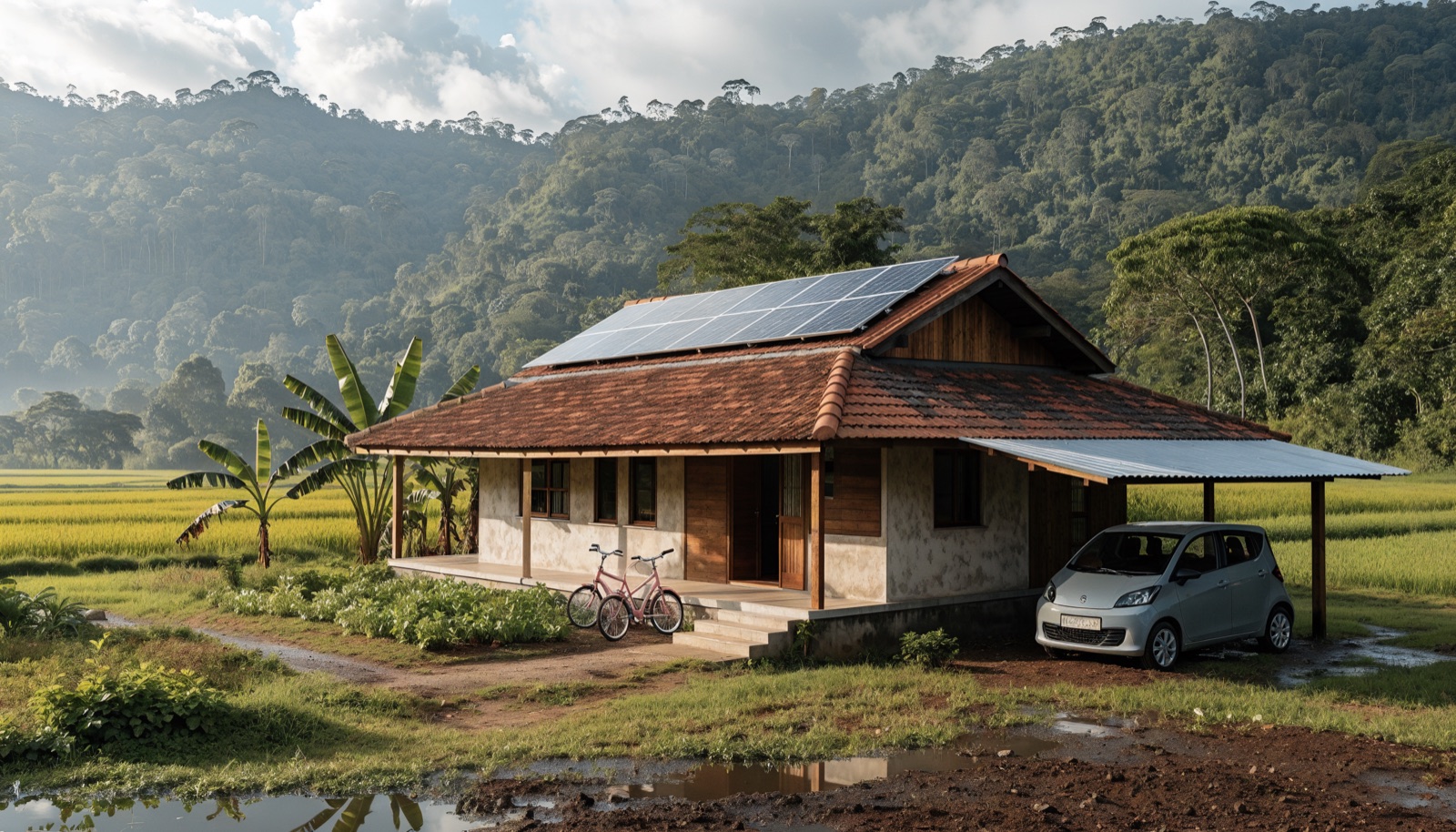
"What I want is a normal four-bedroom home in the south or southwest, with a car, and my kids going to a good school."
That's how a Scandinavian husband described his dream when he asked the Sri Lanka subreddit what it would take to move here with his Sri Lankan wife. No villa. No maid. No infinity pool. Just a normal, comfortable family life, the kind he already had at home, but with more sunshine and more family around.
It's a beautifully clear brief. And it's the brief we hear most often from families thinking about the move. So let's take it seriously and answer it properly.
A quick note before we start: prices in Sri Lanka move, the rupee moves, and every family lives differently. The figures below are honest ballparks drawn from what residents told him in that thread, published relocation guides and what we see day to day on the south coast. Treat them as a starting point for your own spreadsheet, not a quote.
First, some perspective
When he mentioned he could keep a remote customer-service job paying the equivalent of LKR 600,000–800,000 a month, the replies came fast.
One commenter noted that the average Sri Lankan salary is a small fraction of that, and that on his income he'd be considered upper class. Another, a top contributor living in Galle, put it more bluntly: "You can live like a king in Galle for 800k a month. Families of four live here on 60k."
His reply was very Scandinavian: "Not needing to live like a king, but I have a comfortable life in Denmark, so I'm looking for some of the same comforts here, like a car."
The useful answers settled into a fairly consistent range:
- Around USD 1,000/month: "more than enough for a very comfortable upper-middle-class life" if your housing is already sorted (one long-time resident building his own home on the south coast).
- Around USD 2,000/month: "a decent lifestyle" with a remote job or steady income (another highly active commenter).
- LKR 600,000–1,000,000/month: enough to "access nearly any facility available" (a Sri Lankan resident).
- Above LKR 600,000/month after tax: "you can stay above the economic noise" (a Sri Lankan who'd lived in Sweden, paraphrased politely).
That's a wide range, and it should be. The two things that swing it most are exactly the two things on his wish list: the car and the school. Let's go line by line.
1. The home: rent first, build later
Renting. Published relocation guides put a one-bedroom apartment at roughly USD 200–600 a month. A proper four-bedroom family house in a good part of the Galle district will cost more than that, and the price depends heavily on how close you are to the tourist strip. In beach hotspots you're competing with holiday rentals (we explain why that makes long lets so hard in Why It's Nearly Impossible to Find a Long-Term Villa Rental on the South Coast). Move ten or fifteen minutes inland and the picture changes completely: bigger gardens, quieter roads, landlords who actually want a family for the year.
One commenter's advice was spot on: "Get a place rented or leased in the countryside close to a functional town, where you can find a bank and a hospital." Another suggested areas around Baddegama, close to the expressway, a short drive from the beach, with rainforest on the doorstep.
Building. This is where Sri Lanka gets genuinely exciting for families. Construction is far cheaper than in Europe. One resident said his total spend on a house of more than 3,500 square feet came to around USD 50,000. Compare that with the 110-million-rupee Scandinavian house and its 27 remaining years of mortgage, and you can see why so many people's eyes light up.
A few honest caveats:
- Foreigners generally cannot buy freehold land in Sri Lanka. In a mixed marriage, land is commonly held by the Sri Lankan spouse. Long leases and certain apartments are other routes. Whatever you do, use an independent lawyer and do proper title searches. This isn't the place to save money.
- Several people suggested pairing a new build with solar, which cuts your power bills and gives you resilience during outages.
- Don't build in your first year. Rent first, learn the area, then decide. (More on that in our soft-landing plan.)
2. Everyday living costs
The good news: the day-to-day stuff is where foreign income stretches furthest.
| Expense | Rough monthly range (USD) |
|---|---|
| Food & groceries (family, mostly local produce) | 300 – 600 |
| Utilities (electricity, water, gas) | 30 – 120 |
| Fibre internet + mobile data | 20 – 50 |
| Local transport (tuk-tuks, fuel) | 30 – 100 |
| Part-time household help | 100 – 200 |
| Health insurance (per person, annualised) | 40 – 170 |
The utilities and groceries ranges come from published relocation guides, scaled up for a family. The higher end of utilities assumes air-conditioning, which is the one appliance that'll really move your electricity bill.
Food is where you'll notice the biggest lifestyle shift. Local fruit, vegetables, fish and rice are inexpensive and wonderful. Imported cheese, wine and breakfast cereal are not. Families who cook the way their Sri Lankan in-laws do spend a fraction of what families who try to replicate a Nordic supermarket trolley spend.
Household help came up again and again. The original poster said he'd never need a maid, since he'd never be able to afford one back home. A commenter gently pointed out that part-time help is completely normal here ("even the maids have maids") and that having a local person around the house often makes settling in much easier. You don't have to, but don't rule it out on principle. It's one of the ways people here buy back time.
Healthcare. Public healthcare is free but busy. Most foreign families use private hospitals and carry international or local private insurance. Relocation guides estimate USD 500–2,000 per person per year depending on age and cover.
3. The car: the one thing that's genuinely expensive
Every honest answer in that thread flagged this. Vehicles are expensive in Sri Lanka. Import taxes can multiply the price of a car compared with what you'd pay in Europe; one resident estimated the tax at around 300%. A modest, reliable family car that would be unremarkable in Copenhagen can cost what a small house costs elsewhere in Asia.
Ways families handle it:
- Don't buy straight away. Use tuk-tuks and a trusted driver for the first months. You may find you need a car far less than you think. Renting is easy and affordable; car rentals on the south coast start from around USD 25–60 a day, and monthly deals are cheaper.
- Buy used and local, ideally with a mechanic from the family checking it over.
- Consider electric. One commenter pointed out that EVs can work out cheaper than petrol cars under recent tax structures, and pair nicely with rooftop solar.
- Import a recent car properly. Sri Lanka lifted its vehicle import ban in February 2025, and newer cars can be brought in through specialist importers. We cover how this works in Your First 30 Days in Sri Lanka.
Budget a big one-off sum here rather than a monthly one, and you'll avoid the most common nasty surprise.
4. School: the biggest variable for families
Sri Lanka's free public schools are a source of national pride, but most teach in Sinhala or Tamil, and the quality varies. Most foreign and mixed families choose private or international schools offering British (Edexcel/Cambridge), IB or similar curricula.
Fees vary enormously by school and grade. Smaller international schools in the south can be quite reasonable; premium Colombo schools are much more. One commenter estimated you shouldn't need to spend more than about USD 500 a month per child, even at the top end, and many families pay considerably less. Remember that school fees are often charged per term, plus admission fees, uniforms, transport and activities.
The Galle area has several English-medium options within reach of Hikkaduwa, Unawatuna and Ahangama. Visit them, sit in on a class, talk to other parents. In a mixed family, it's also worth thinking about what language you want your children to grow up strongest in.
5. Putting it together: a sample family budget
Here's a realistic monthly picture for a family of four living comfortably in the Galle district: renting a good family house inland, two kids in a mid-range English-medium school, one car, part-time help.
| Category | Approx. USD / month |
|---|---|
| Rent (3–4 bedroom house, 10–20 min from the coast) | 500 – 1,000 |
| Groceries & eating out | 400 – 700 |
| School fees (2 children, averaged monthly) | 300 – 900 |
| Utilities & internet | 80 – 170 |
| Car running costs (fuel, insurance, maintenance) | 100 – 200 |
| Household help (part-time) | 100 – 200 |
| Health insurance (family) | 150 – 350 |
| Fun, travel within Sri Lanka, buffer | 200 – 400 |
| Total | ≈ 1,830 – 3,920 |
That doesn't include buying a car or building a house; those are one-off capital costs. But it does show something important: the "Scandinavian comfort" version of Sri Lankan family life typically lands somewhere around USD 2,000–4,000 a month. On a remote salary at the level the original poster described, that's not just livable. It leaves room to save.
For a deeper line-by-line breakdown, see our True Cost of Living in Sri Lanka as an Expat guide.
A word on money logistics
A few practical points that people often only discover after arriving:
- Keep your income in foreign currency if you can, and bring it in through proper banking channels. Accounts such as a Personal Foreign Currency Account make life easier. Rules and tax treatment around foreign-earned income have changed in recent years, so talk to a Sri Lankan tax adviser rather than relying on forum posts (including that thread, where people disagreed).
- Keep a buffer. Several commenters stressed having enough in the bank to go home if you ever need to. That's not pessimism. It's what lets you relax and enjoy the move.
- Think in rupees for daily life, dollars for planning. Exchange rates move, and a budget built only in one currency will drift.
The bottom line
The question in that thread was "what is a livable wage?" The real answer is that a normal, comfortable family life in southern Sri Lanka, with a proper home, a car and a good school, is well within reach of a single decent Western salary or remote income. Not because Sri Lanka is "cheap," but because so many of the costs that crush families in the West (housing, childcare, time) simply weigh less here.
What's left over is the good stuff. Grandparents nearby. Weekends at the beach. Dinner with the neighbours on a Tuesday because why not.
If you haven't read it yet, The Open-Door Life is about why families make this move. And when you're ready to plan how, our soft-landing guide walks through the steps, from savings targets to visas to the trial year.